July 1-3, 2026
IFPRI-PNG recently participated in the 5th National Food and Nutrition Conference for Papua New Guinea, organized by the PNG Department of Agriculture and Livestock (DAL) and hosted by the Papua New Guinea University of Technology (PNGUoT) in Lae, Morobe Province. The conference showcased a portfolio of research and development program insights aimed at building a more sustainable, inclusive, and nutrition-sensitive agricultural framework for PNG.
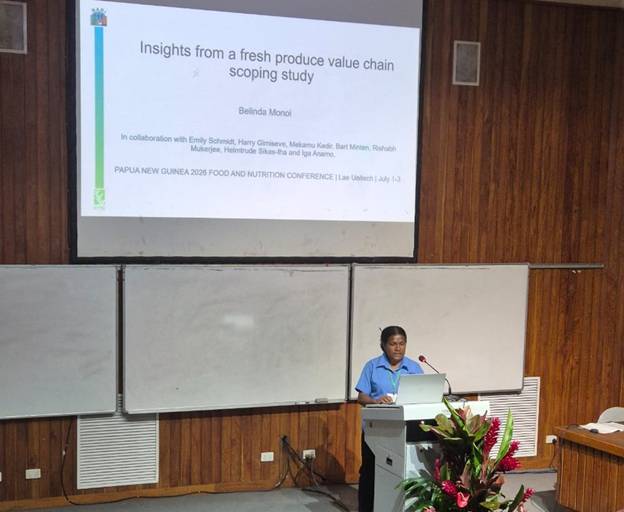
Picture credit: IFPRI-PNG
IFPRI staff contributed 3 presentations to the conference:
Insights From a Fresh Produce Value Chain Scoping Study, presented by Belinda Monoi from NARI described recent results from a scoping study to examine the costs, challenges, and opportunities in the fresh vegetable value chain. The study mapped fresh produce flows throughout the country using market data collected by FPDA. In addition, a series of focus groups revealed that relatively high production volatility, combined with high cost of inputs, high transaction costs, and inadequate access to finance, complicates investment decisions for producers, traders and wholesalers in the supply chain. Investments to promote rural cluster development through a portfolio of geographically focused investment may reduce production, packaging, storage, transportation, and marketing costs, while also promoting improved quality in the fresh produce sector.
Impact of GST Zero-rating Policy and Increased Minimum Wage Rate on Food Security, presented by Harry Gimiseve provided an analysis of the potential short-term impacts of the recent GST zero rating policy and new minimum wage rate on food security and diet quality-related indicators using a new tool called the Food Security Simulator Papua New Guinea (FSS-PNG). Simulations results suggest that lower prices would incentivize more households to consume animal-source foods. However, simulations suggest that a reduction in the price of animal-source food may be linked with a decline in the consumption of vegetables. Overall, the FSS-PNG model shows that the GST zero rating policy and the increased minimum wage rate potentially is beneficial to rural PNG, with lowland households benefiting the most.
Mother and Child Nutrition in Rural Households -Evidence from the 2023 PNG Rural Household Survey, presented by Helmtrude Sikas-Iha provided updated evidence of the prevalence of child growth outcomes using the 2023 PNG Rural Household Survey. Analysis suggests that approximately 36% of sample children under 5 are stunted in their growth (or too short for their age), indicating a deficient environment for child growth which could be related to poor nutrition, repetitive infection or illness, or inadequate feeding practices. For young children under 2 years of age, analysis suggests that inadequate WASH practices and the health environment is one of the largest factors correlated with stunting.
[ES1]Link to presentation by Belinda Monoi here.
[ES2]Link to presentation by Harry Gimiseve: F&NC…..pptx
[ES3]Link to Trudie presentation: Mother and Child Nutrtion...pptx