November 10-21, 2025
IFPRI and NARI ran a two-week, hands-on kick-off workshop to launch the PNG Vegetable Value Chain Survey Project. The workshop was designed to strengthen practical, end-to-end survey implementation capacity, moving from research questions and sampling design through instrument drafting, tablet programming, pretesting, revision, and initial data checks.
Partners: National Agricultural Research Institute (NARI) and IFPRI
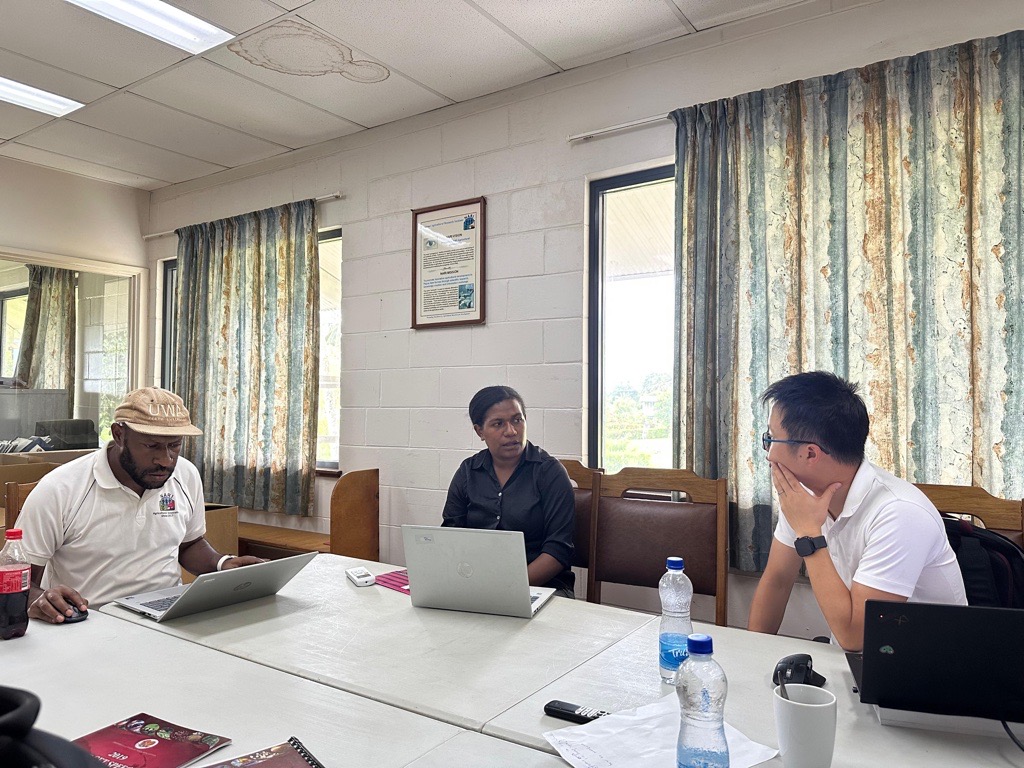
The workshop aimed to:
- Align on a short list of priority research questions (and testable hypotheses) to guide the vegetable value chain survey.
- Draft and refine a few example modules as building blocks for the full questionnaire.
- Strengthen NARI staff skills in survey design and digital data collection (SurveyCTO logic, validations, and flow).
- Produce a set of concrete deliverables (paper instrument, tablet-ready version, and pilot data) that the team can use as a template for full survey preparation.
Workshop structure and activities
Week 1: Research framing, sampling, and operational readiness
- Project context and agenda: The team reviewed the motivation for a representative vegetable value chain survey.
- Budget and field operations: The team jointly reviewed and updated cost items and clarified financial processes (including reimbursement procedures and receipt templates) to ensure implementation readiness.
- Methods and sampling: Sessions reviewed common approaches used in quantitative value chain research—sampling options, identification strategies, and examples of how similar studies structure questions and data needs. We then translated those ideas into what is realistic in the PNG context and what needs to be captured in the survey.
- Example research question development: We used two themes as concrete examples to guide module design:
- How farm size (land area) is linked to input use and productivity in vegetable production.
- How seasonality and month-to-month price/supply shifts influence marketing decisions and outcomes.
Week 2: Questionnaire finalization, tablet programming, and pretest
- Drafting and digitization: Paper modules were refined and then converted into a tablet-compatible SurveyCTO instrument, including skip patterns, validations, and internal consistency checks.
- Pilot pretest: A five-interview pilot pretest was conducted, followed by a structured debrief to identify confusing questions, missing response options, timing constraints, and field-relevant wording issues.
- Revision and initial data checks: The team revised the modules based on the debrief and reviewed the pilot dataset to do quick quality checks (missing values, out-of-range entries, and internal consistency).
Key outputs and deliverables
By the end of the two weeks, the team had:
- A clear set of priority research questions to anchor the vegetable value chain survey.
- Draft versions of key questionnaire modules (paper).
- A tablet-ready SurveyCTO version (Excel specification plus programmed form).
- Pilot data from five pretest interviews, used to guide revisions and plan next steps for fieldwork.
Capacity strengthening outcomes
The workshop strengthened NARI’s practical capability to implement quantitative value chain surveys by developing hands-on experience in:
- Translating research questions into measurable indicators and survey modules.
- Designing robust skip logic, validations, and survey structure for digital data collection.
- Conducting pretests and using evidence from pilots to revise instruments.
- Establishing an end-to-end workflow for data quality assurance and rapid-turn descriptive checks.
Training Agenda and Training Materials: Presentation – Lesson 1 | Presentation – Lesson 2 | Presentation – Lesson 3